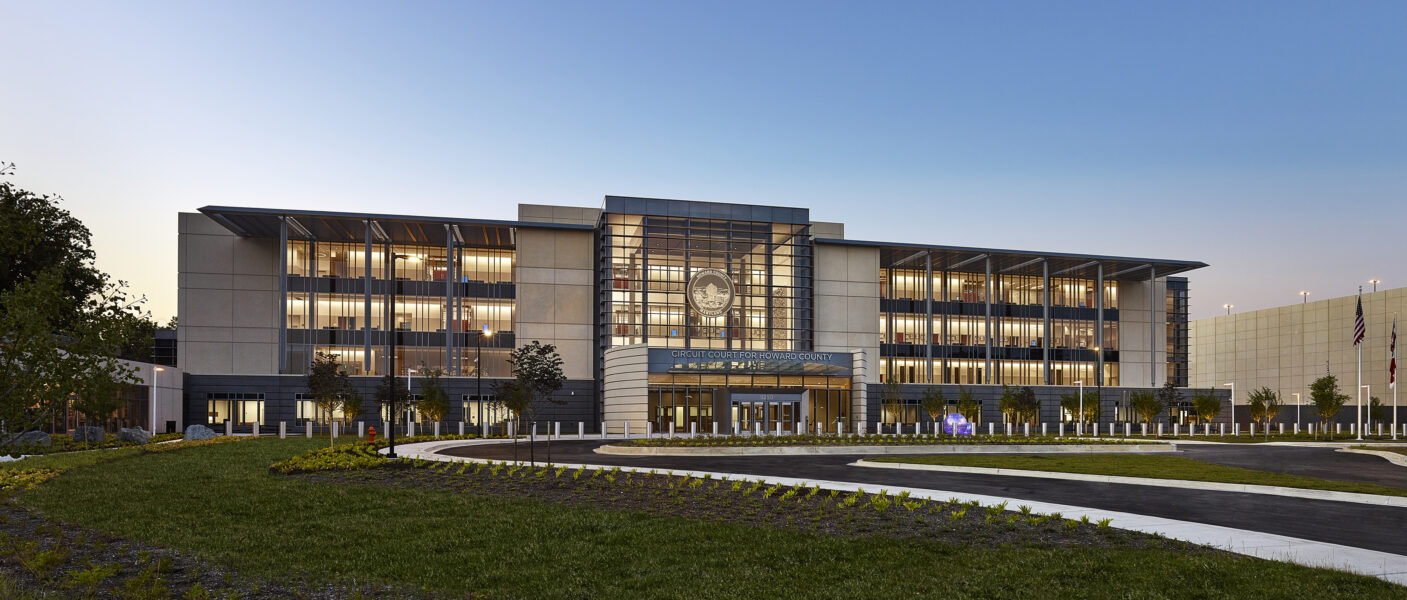
Howard County Courthouse
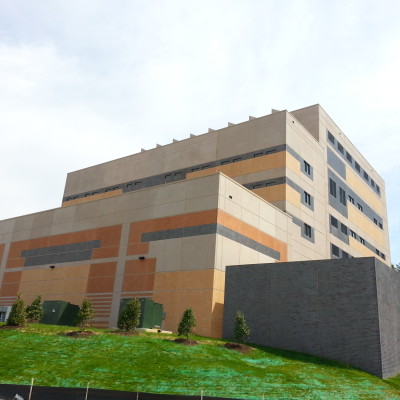
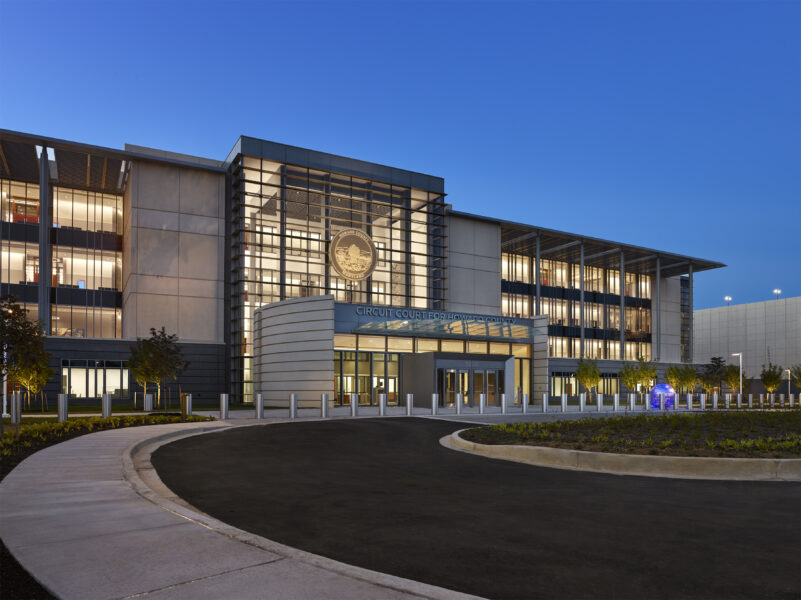
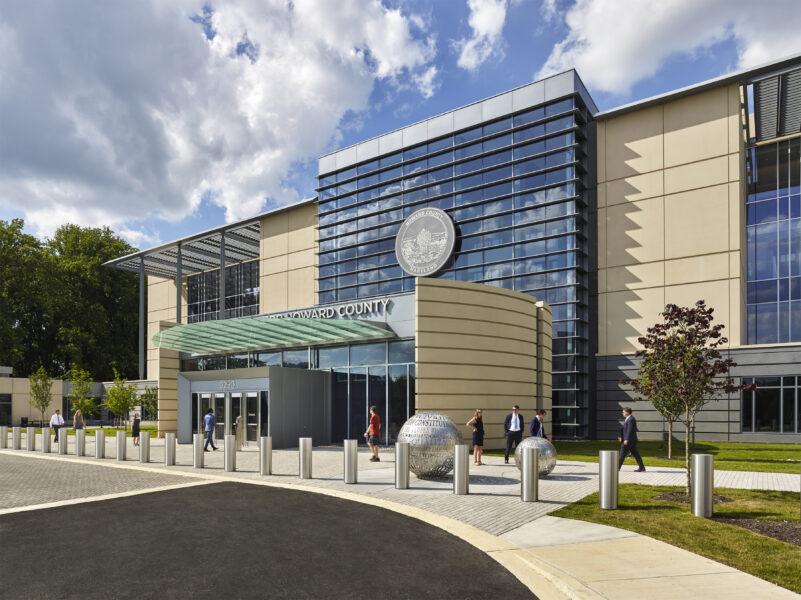
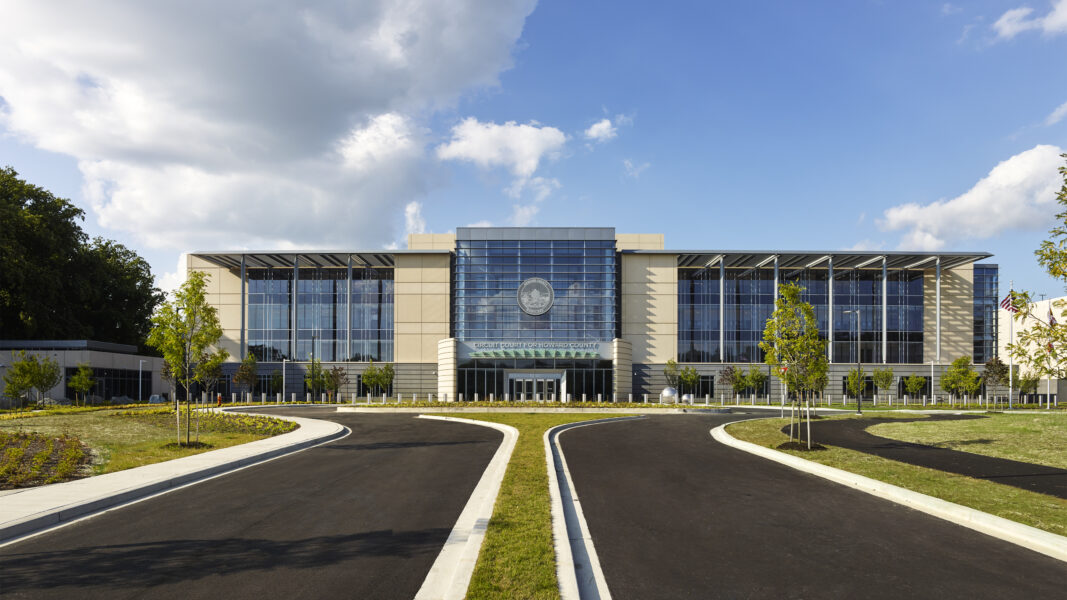
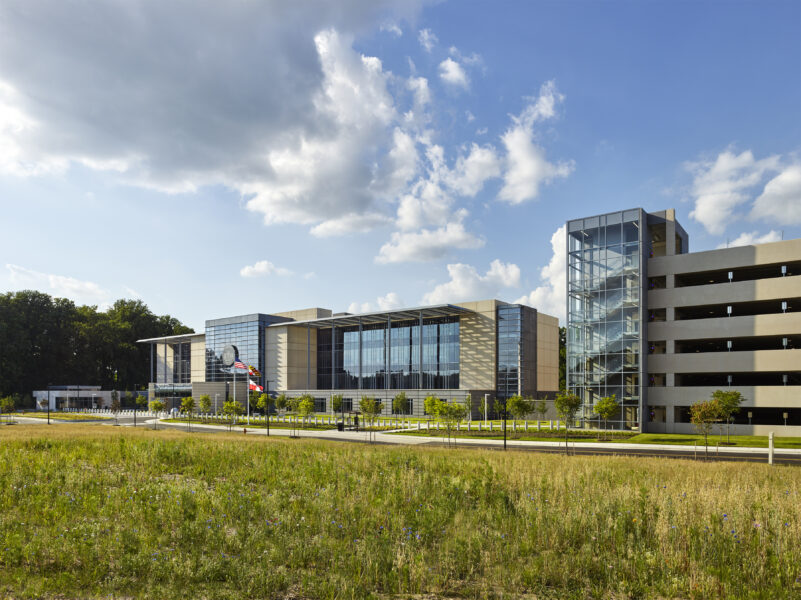
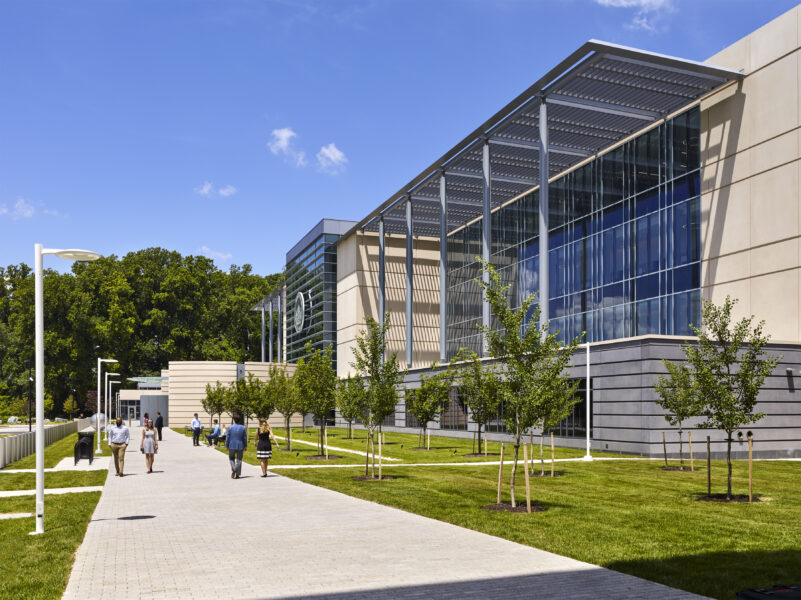
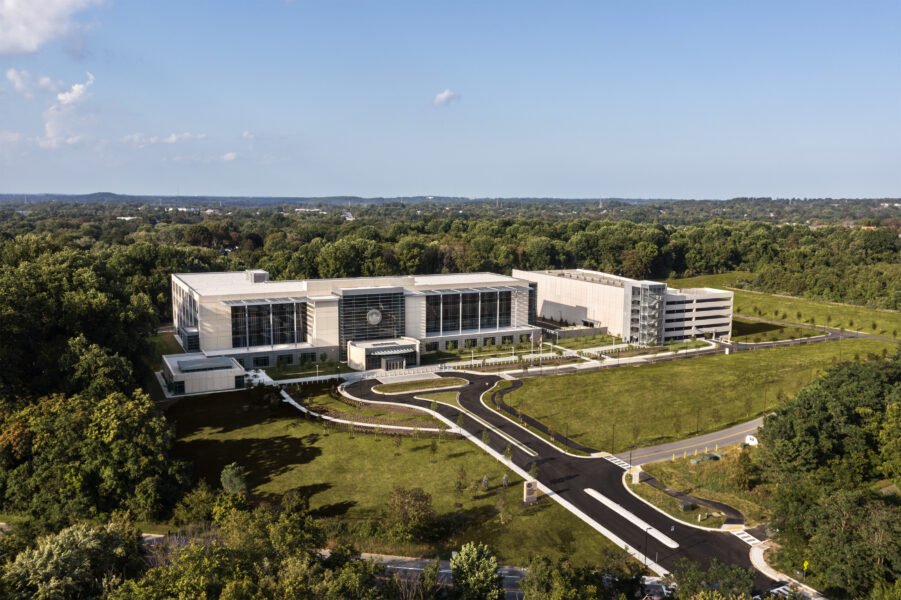
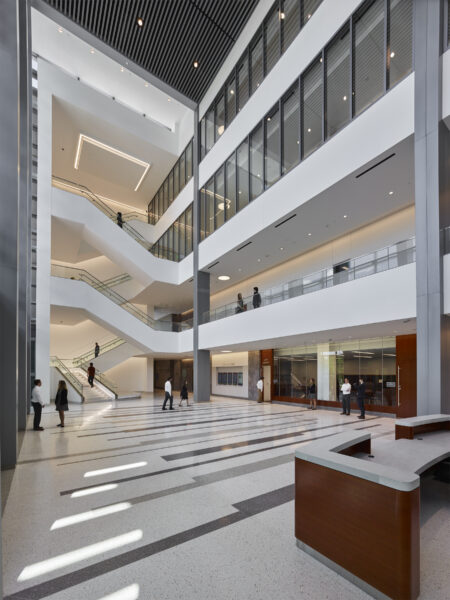
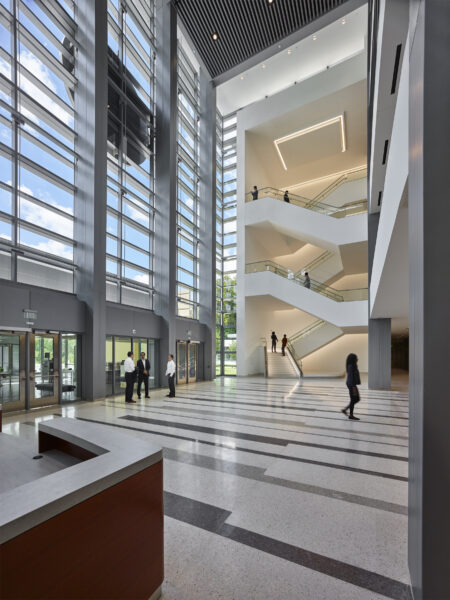
Wiley|Wilson provided MEP design for a new, 232,000 square foot, four-story, LEED-Gold certified Courthouse and adjacent six-story parking garage. A sophisticated technology system design allows for enhanced public safety and security through the integration of intelligent building systems. The Fire Alarm, Mass Notification, and Public Address Systems are fully integrated, reducing visual interruptions with combined devices. Smart screens such as Internet-connected Televisions (IPTVs) and scheduling displays are programmed to display mass notification and public address messages so that urgent messages have a better chance of reaching targeted occupants and zones. Enhanced electrical reliability is provided through entire-building backup generators running on natural gas to enable a shelter–in-place philosophy. The building’s information technology (IT) systems are provided with a centralized Uninterruptible Power Supply (UPS) distribution system. If both natural gas and electrical utilities are lost, there is a provision for a manual, temporary generator to be connected to the system. In addition, there is a ground- and roof- mounted photovoltaic (PV) solar panel system producing 790 kilowatts (kW) of generation, translating to 1,105,300 kilowatt hours of generation per year.
Occupant comfort is a key consideration in the new space. The HVAC system provides a comfortable and healthy indoor environment while minimizing energy and allowing flexibility for future building modifications. Systems were selected and designed to optimize reliability, reduce service interruptions, and maintain lower maintenance costs. The health and well-being of the public were taken into account in the design including the use of a 100-percent direct outdoor air system (DOAS). This increased ventilation helps to reduce the risk of airborne illnesses through air dilution.
Courthouses always host sensitive and confidential conversations. Therefore, acoustics within the building were a critical design consideration. The MEP systems includes acoustic considerations throughout, from the treatment of penetrations, to lining of air ducts, vibration isolation of rotating machinery, and reduced friction diffusers and grilles.
Construction Cost: $200M